MECHA Run
A multi-agent run that has to prove the result
Last updated August 8, 2026
The audit checks the contract. The MECHA run executes it. Your compiled work order gets dispatched to a real multi-agent swarm inside an isolated Daytona sandbox, and the run is not done until the acceptance criteria are verified by a separate reviewer.
How a run works
- You build a work order. Goal, acceptance criteria, non-goals, budget. Grok can draft it from plain English.
- Pick a strategy. The swarm fans out under senate, triumvirate, best-of-3, or a solo lineage, with workers from Claude, Codex, and Grok lines via OpenRouter.
- Watch it run. Live telemetry streams from the sandbox as workers post evidence. Runs take minutes, not seconds.
- Get the verdict. A reviewer synthesizes the final answer and the full evidence chain. You get the report, the exit code, and the artifacts.
Pricing
Runs start at $10. Scale the number of agents and the price moves up with the compute you are actually using, capped so a runaway swarm cannot surprise you.
Why sandboxed matters
The sandbox keeps the swarm from touching anything outside the job. No stray pushes, no emails to real customers, no side effects beyond the workspace you gave it. Combined with the contract's explicit preauthorized list, that is the difference between an agent that explores and an agent that wanders.
What you get back
A MECHA run returns more than a chat answer. You get the full evidence chain:
- Live telemetry as the workers fan out and report in
- Exit code (SUCCESS, PARTIAL, NEEDS_HUMAN, STALLED) based on acceptance criteria
- GAMMA HQ report synthesizing the run into an executive-grade Markdown document
- Optional HD presentation with AI-generated imagery when scoped generation is available
- Optional PDF export for archival or sharing
- Email copy of the deliverable to your checkout address
Example output (operator-run case)
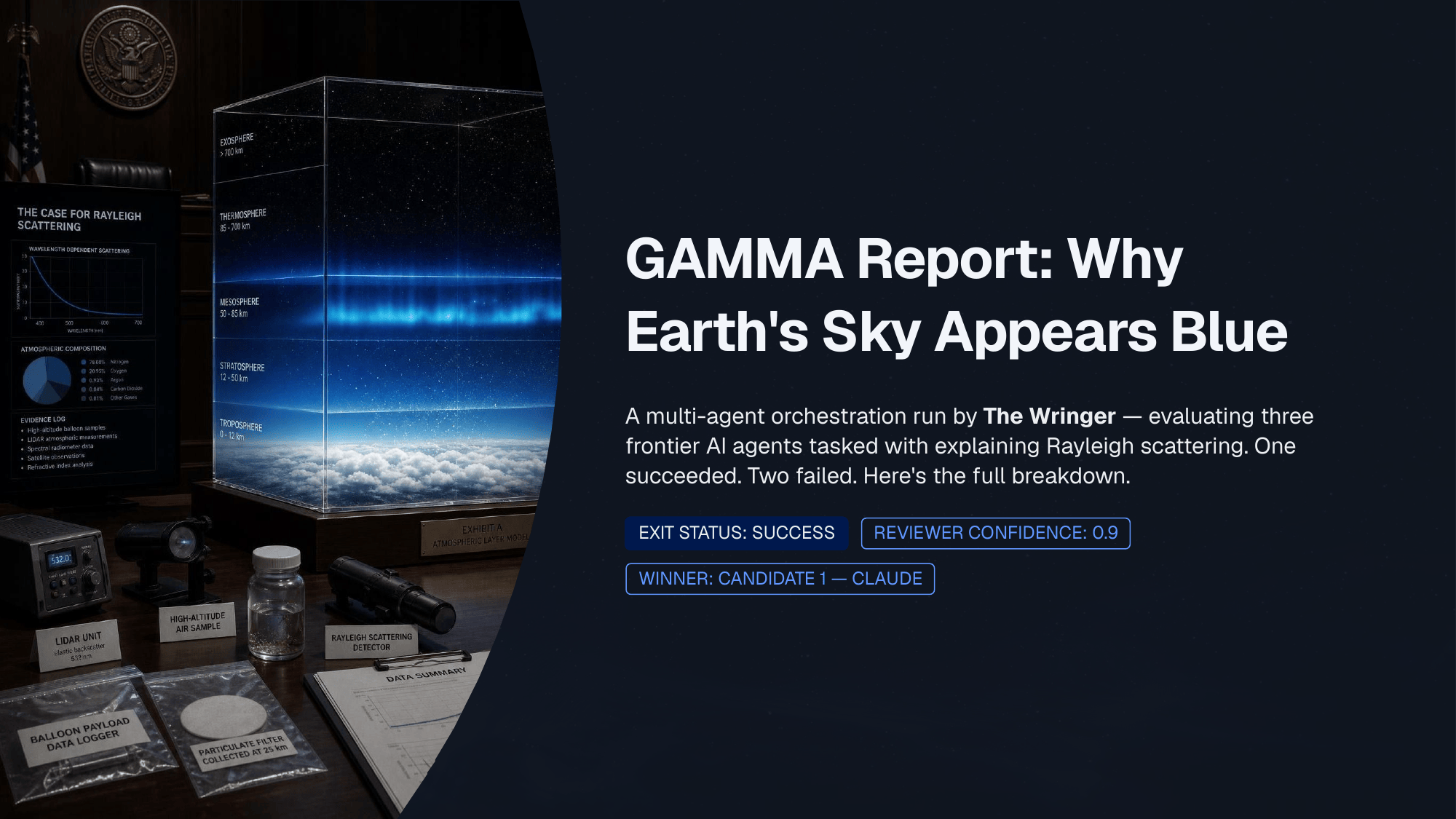
This is the real output from the "sky-blue" verified case, run with a triumvirate strategy.
HD presentation generated by GAMMA using GPT Image 2. Browse all 8 slides below or click the stage to open the full deck.
When to run MECHA
- When the job is real and the contract has been audited
- When you want the result verified by an independent reviewer, not the same model that did the work
- When a single chat answer is not enough evidence for a decision
Run the $1 audit first, then build the work order that survives it.
Put your next agent task through the press
Talk to Grok, get a tight work order, and hit it with a $1 audit before anything expensive runs.